
Home readings guide real treatment decisions — but only if they're taken properly. Five minutes of technique makes your numbers worth acting on.
Use the right monitor
Choose an automatic upper-arm cuff monitor — wrist and finger devices are less reliable. Ask your pharmacist for a validated model (one that has passed independent accuracy testing) and check the cuff size fits your arm: a cuff that's too small reads high. Bring your monitor to an appointment once so it can be checked against the clinic's.
Set yourself up
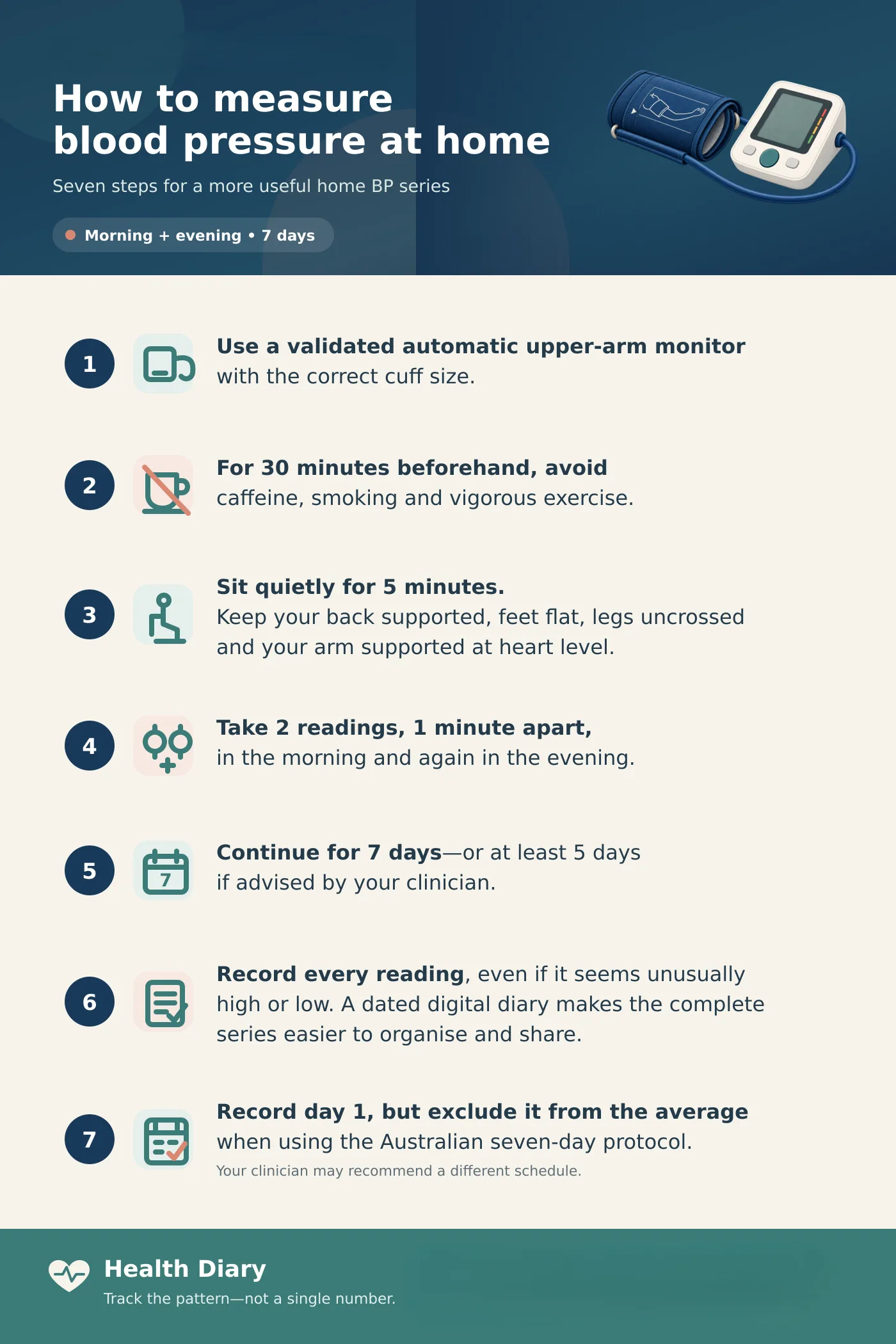
- Rest first. Sit quietly for five minutes before measuring.
- Sit properly. Back supported, legs uncrossed, feet flat on the floor.
- Arm at heart level, resting on a table — not hanging by your side.
- Cuff on bare skin, not over clothing, with the tube facing your palm.
- Stay still and silent while the cuff inflates — talking raises the reading.
Avoid the things that push readings up
For 30 minutes before measuring, avoid caffeine, smoking and exercise. A full bladder, pain, being cold, or rushing in from outside can all raise your numbers too. If something like that applied, note it in the comment field of your diary — context helps your doctor read the numbers fairly.
When and how often
Follow your own doctor's advice on timing — it depends on your situation and medicines. A common pattern is morning and evening: the morning reading before breakfast (and, if your doctor agrees, before your morning tablets), the evening reading before bed. Many doctors suggest taking two readings a minute apart each time and recording both.
Record everything — even the good ones
The picture over weeks matters far more than any single number. Record every reading rather than just the ones that worry you — skipping "good" readings makes your average look worse than it is. A free online diary does the averages and charts for you, or use the printable sheet if you prefer paper.
One high reading is not an emergency by itself
Blood pressure moves around all day, and an occasional high reading is common. What matters is the pattern — which is exactly what your diary shows your doctor. But if a high reading comes with symptoms such as chest pain, severe headache, trouble breathing, weakness or trouble speaking, don't wait and don't re-measure — call 000.
Track the pattern, not a single number
A dated record you can share with your doctor.
Sources
- National Heart Foundation of Australia, Blood pressure and heart health — https://www.heartfoundation.org.au/your-heart/blood-pressure-and-your-heart
This is general information and does not replace advice from your doctor or healthcare professional. Health Diary does not monitor your readings. If you feel unwell or a reading worries you, contact your doctor's rooms, or call 000 in an emergency.